
Composite Decking vs Timber: Cost, Durability & Value in Australia
Q: How much does composite decking cost vs timber in Australia?
Composite decking typically costs 20–40% more upfront than untreated timber. A square metre of quality composite decking runs $80–$120 AUD, while untreated timber costs $50–$80. Treated timber is similar to composite upfront. The difference shows over time. Composite requires no ongoing treatment; timber requires regular staining, oiling, or sealing. Over a 15-year deck life, timber homeowners spend an extra $4,000–$8,000 on maintenance, coatings, and repairs. Composite breaks even within five years and saves money after that.
Q: How long does composite decking last compared to timber?
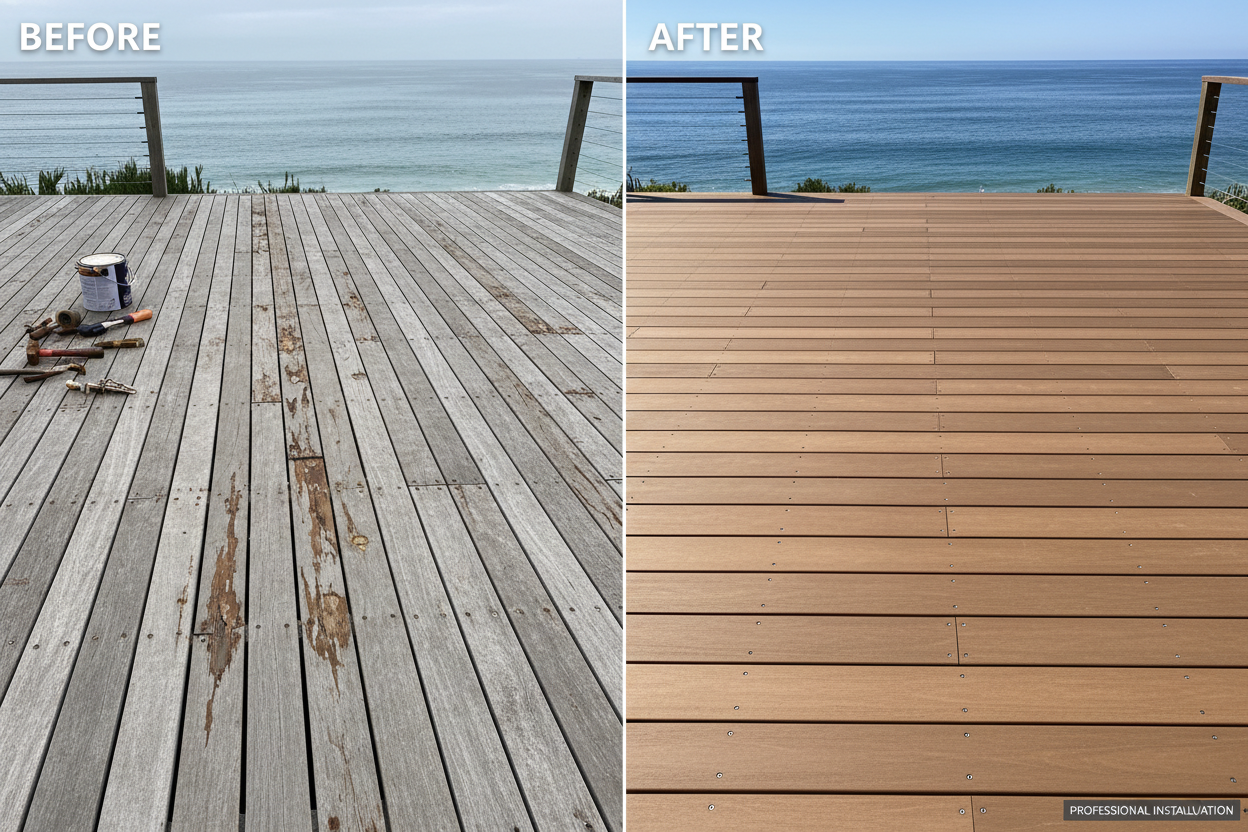
Quality composite decking lasts 20–25+ years with minimal maintenance. Timber decking lasts 5–10 years before significant repair or replacement is needed. Even treated timber requires restoration work within 10–12 years. Composite doesn't rot, doesn't splinter, and doesn't need rebuilding. A timber deck installed in 2010 in Melbourne is likely rotting in its posts and core boards by 2025. A composite deck from 2010 still performs like new.
Q: Is composite decking worth the extra upfront cost?
Yes, if you plan to own the property for more than five years. The maths are straightforward: spend $2,000 more upfront, avoid $5,000 in maintenance over 15 years, and have a deck that performs for 25 years instead of 10. If you're selling within three years, the cost premium doesn't recoup. If you're staying, composite is worth every dollar. Australian builders and developers increasingly choose composite for rental properties and permanent installations because the numbers work.
Q: Does composite decking handle Australian heat and UV?
Quality composite decking is UV-stable and designed for Australian sun. Exposure causes minimal colour fade (5–10% in the first year, then stabilises). Composite doesn't blister, peel, or delaminate like timber stain. Temperature won't cause warping or cupping. Australian coastal salt air doesn't degrade composite like it does timber. Cheap composites from overseas can show poor UV resistance and discolour badly. Premium composites from established Australian suppliers stay stable. THQ supplies composite engineered for Australian UV and heat.
Q: What maintenance does composite decking require vs timber?
Composite needs a rinse with water and mild detergent twice a year. That's it. Timber needs annual staining, oiling, or sealing. Every 3–5 years, timber needs power washing, sanding, and recoating. Mould and algae on timber need active treatment. Composite resists mould naturally. Over 20 years, composite maintenance is 20–30 hours total. Timber maintenance is 100+ hours and costs thousands. Composite wins on time and money.
Q: Is composite decking slippery when wet?
Composite is more slippery than rough timber when wet, particularly in the first one to two years. Surface texture roughens with weathering and foot traffic, improving grip. Using composite decking with good drainage (not pooling water) reduces slip risk. Anti-slip treatment (caps, sanding, or textured finishes) is available for high-traffic or pool-adjacent applications. Timber is also slippery when wet and becomes more dangerous as moss and algae grow. Composite stays cleaner and safer long-term.
The Real Comparison
Composite decking costs more upfront because it lasts longer, looks better, and requires no maintenance. Timber costs less initially but demands constant work and replacement. Over 20 years, composite is cheaper and better. Australian climate—sun, salt, frost, moisture swings—makes this difference even more obvious. Builders and homeowners serious about durability choose composite. THQ supplies Australian-tested composite and backs it with 15+ years of experience.
Request free samples or get a quote at thq.com.au